Best IPTV Provider in USA for Flexible Entertainment
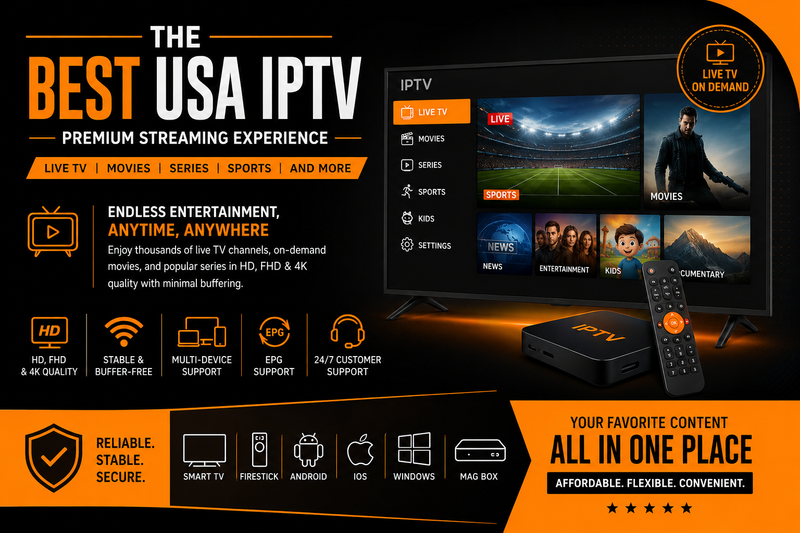
Best IPTV Provider in USA: A Practical Guide to Choosing Live TV in 2026
Finding the best IPTV provider in USA is less about discovering one service that suits everyone and more about identifying the option that matches your viewing habits. American households have different priorities: some want live sports, others care about local stations, entertainment, news, family programming, or a large on-demand library.
Internet-based television has also changed what viewers expect from a subscription. People increasingly want flexible access across televisions, phones, tablets, computers, and streaming devices without dealing with the limitations of traditional cable.
However, choosing a service based only on price or channel count can lead to disappointment. A better comparison looks at the complete viewing experience, including content availability, streaming performance, supported devices, DVR options, simultaneous viewing, customer service, and billing terms.
💥 Save More on Your IPTV Plan
💥 Save More on Your IPTV Plan
Start With Your Own TV Routine
Before comparing providers, identify what you actually watch.
A sports enthusiast may need specific networks and live-event coverage, while a family might care more about children's programming and multiple simultaneous streams. Someone who primarily watches local news may have completely different requirements from a viewer focused on international content.
Make a short list of your priorities:
Favorite live channels
Sports and competitions
Local programming
Movies and series
News
International channels
Number of household viewers
Preferred viewing devices
DVR or recording requirements
Monthly budget
This gives you a useful framework for comparing services without getting distracted by marketing claims.
Channel Count Isn't Everything
Large channel numbers are often used to make IPTV packages look attractive. But the total number tells you very little about whether a service will actually meet your needs.
Imagine paying for hundreds of channels while regularly watching only a dozen. A smaller, carefully selected lineup could offer more practical value.
When comparing a provider, examine the actual channel list. Check whether the networks you care about are included and whether availability depends on your ZIP code or region.
Local channels deserve particular attention. Broadcast stations can vary by market, so never assume that a channel available in one American city will automatically be available in another.
💥 Save More on Your IPTV Plan
💥 Save More on Your IPTV Plan
Compare Providers by Real-World Features
Instead of focusing on one specification, consider the entire package.
| Local channels | Important for local news and broadcast programming |
| Sports coverage | Helps fans access the networks and events they follow |
| Channel lineup | Determines whether your favorite programming is included |
| DVR | Lets you record programs for later viewing |
| Simultaneous streams | Important for households using multiple screens |
| Device support | Determines where you can watch |
| EPG | Makes live programming easier to browse |
| On-demand library | Adds flexibility beyond live TV |
| Pricing | Helps compare ongoing monthly value |
| Customer support | Useful when setup or billing issues occur |
This approach makes the comparison much more meaningful than simply asking which provider has the largest catalog.
Sports Can Change the Entire Decision
Sports are one of the biggest reasons people choose live television services.
But sports availability is complicated by broadcasting rights. A service may offer many sports networks while still lacking a specific league, regional network, or event you want to watch.
If sports are central to your household, identify the competitions you follow and check the current provider lineup.
Consider whether you need coverage for:
NFL
NBA
MLB
NHL
College sports
Soccer
Tennis
Golf
Motorsports
Other regional or international competitions
Don't rely only on a generic “sports package” label. Verify the actual channels and events included with the plan available in your location.
Local Television Deserves Special Attention
One advantage of traditional television has historically been easy access to local broadcast stations. Internet-based services can provide similar access, but availability varies by market.
If you regularly watch local news, weather, or broadcast networks, check the provider's availability for your ZIP code.
This is especially important when comparing services advertised nationally. A channel lineup shown on a provider's general website may not represent exactly what is available in every American market.
A few minutes spent checking local availability can prevent an unpleasant surprise after subscribing.
Device Compatibility Should Be on Your Checklist
A modern television subscription is rarely limited to one screen.
You may watch from a living-room Smart TV, a bedroom television, a smartphone while traveling, or a computer during the day.
Before choosing a service, verify support for the devices you use most.
Common categories include:
Smart TVs
Roku devices
Amazon Fire TV devices
Apple TV
Android TV
Smartphones
Tablets
Web browsers
Computers
Device support isn't the only consideration. Think about how easy the application is to navigate.
A service can technically support your television while still offering an awkward interface. Fast channel switching, useful search, favorites, clear menus, and remote-friendly navigation can have a major impact on daily use.
💥 Save More on Your IPTV Plan
💥 Save More on Your IPTV Plan
Multiple Screens Matter for Families
A household with several viewers needs to think beyond basic device compatibility.
If one person is watching a sports game while another wants a different program, simultaneous-stream limits become important.
Check the provider's rules for:
Registered devices
Active streams
Household accounts
Additional screens
Location restrictions
Account-sharing policies
A package that works perfectly for a single viewer may be less suitable for a larger household if the service restricts simultaneous playback.
Streaming Quality Depends on More Than Your Internet Plan
A fast internet connection is helpful, but it isn't the only factor affecting playback.
Video performance can depend on network congestion, Wi-Fi strength, device hardware, stream quality, and the provider's infrastructure.
During a trial or introductory period, test the service at the times you normally watch.
Don't just open one channel for five minutes. Try several channels and watch for a reasonable period.
Pay attention to:
Buffering
Channel startup speed
Picture quality
Audio synchronization
Channel switching
Performance during busy periods
Stability across devices
For live sports and breaking news, consistent performance can be particularly important.
DVR Can Make Live TV More Flexible
A DVR allows viewers to record programming and watch it later.
This is useful for people who have busy schedules or regularly follow programs that overlap.
However, DVR features vary between services. Check storage limits, recording duration, supported channels, and how long recordings remain available.
Some services may offer unlimited storage while others use different limits or retention policies.
If recording is important to you, treat it as a major purchasing factor rather than an optional extra.
EPG Improves Everyday Navigation
An electronic program guide can make live television feel much more organized.
Instead of opening channels individually to see what is playing, an EPG displays current and upcoming programs in a schedule.
For viewers who browse live television regularly, this can save time.
A useful guide should make it easy to:
Browse channels
See current programming
Check upcoming shows
Find specific programs
Navigate categories
Remember that guide accuracy depends on the provider's data. Check whether schedules appear correctly for the channels you use most.
On-Demand Content Adds Flexibility
Live television remains important, but viewers don't always want to watch programs according to a fixed schedule.
On-demand movies and series allow you to choose something whenever you have time.
When comparing providers, don't simply look for the phrase “VOD included.” Explore the actual catalog and determine whether it contains programming relevant to you.
Some viewers may barely use on-demand content, while others may consider it one of the main reasons for subscribing.
Pricing Should Be Viewed Long-Term
A promotional price can make a provider look inexpensive initially, but the standard recurring rate is more important when evaluating long-term value.
Before signing up, review:
Introductory pricing
Standard monthly cost
Renewal terms
Billing frequency
Additional fees
Cancellation process
Refund policy
Equipment costs, if applicable
This helps you understand what the subscription will actually cost after any promotional period ends.
A transparent provider should make these details reasonably easy to find.
Customer Support Is Easy to Overlook
Technical problems are not always avoidable, even with established streaming services.
Good customer support can make setup and troubleshooting much easier.
Look for clear help documentation and accessible support channels. It is also useful to check whether account and billing information can be managed without contacting support for every small change.
Be cautious about services that provide very little information about their company, policies, or support options.
Legal Access Matters
The term IPTV describes a method of delivering television programming over an internet connection. It does not automatically determine whether a particular provider is authorized to distribute its content.
When evaluating services in the United States, choose legitimate providers and authorized content sources.
Be especially careful with services promising premium sports, movie channels, and enormous television catalogs for unusually low prices without clearly explaining their content rights.
A low monthly cost isn't useful if the service creates uncertainty about the legality or availability of the programming.
Which Type of Viewer Are You?
Different viewers can prioritize different features.
| Sports-focused | Relevant networks and live-event availability |
| Family household | Multiple streams and parental controls |
| Movie lover | Strong on-demand selection |
| News viewer | Local and national news availability |
| International viewer | Regional and language programming |
| Casual viewer | Flexible pricing and simple navigation |
| Heavy live-TV user | Reliable playback and EPG |
| Busy professional | DVR and replay features |
This illustrates why there isn't a universal formula for selecting a television service.
A Trial Is Your Best Practical Test
If an authorized provider offers a trial, use it to test the things that matter to you.
Watch your favorite channels. Check local programming. Try your main television and another device if necessary. Browse the guide and test any recording or on-demand features you expect to use.
Most importantly, test the service during your normal viewing hours.
A trial can reveal practical problems that aren't obvious from a channel list or promotional page.
Frequently Asked Questions
Is IPTV legal in the USA?
IPTV technology itself is a legitimate method of delivering video over the internet. The key issue is whether the service has the necessary rights to distribute the programming it offers.
Should I choose a provider based on channel count?
Not necessarily. Relevant channels, dependable playback, device compatibility, and transparent pricing can be more useful than a very large channel number.
Are local channels available everywhere?
Local channel availability can vary by market and ZIP code. Check the provider's current local-channel availability before subscribing.
Do all services support multiple devices?
No. Device compatibility and simultaneous streaming limits vary between providers, so review the current terms for your chosen plan.
Is DVR important for live television?
It can be valuable if you frequently miss scheduled programs. However, storage, retention, and supported channels differ between services.
What should sports fans check first?
Identify the specific leagues, competitions, and networks you follow, then confirm that they are included in the plan available in your location.
Final Thoughts
Finding the best IPTV provider in USA starts with understanding your own television habits.
Rather than choosing a service because it advertises the biggest channel collection or the lowest introductory price, compare the factors that will affect your everyday experience.
Check the actual channel lineup, local availability, sports coverage, supported devices, streaming stability, EPG, DVR, on-demand content, simultaneous streams, pricing, and customer support.
A trial can be particularly useful because it allows you to test the service under real viewing conditions.
Finally, make sure the provider uses authorized content. Once content rights, reliability, and practical features are all considered, you can make a much more informed choice about the television service that fits your household.