IPTV Box: A Practical Guide to Setup, Features, and Safe Use
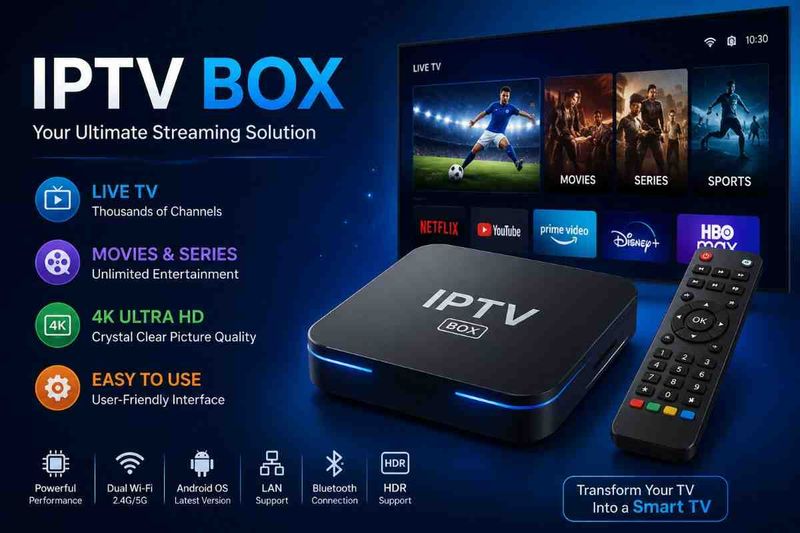
Watching television no longer requires a traditional cable or satellite setup. An IPTV box can connect your television to internet-based video services and turn a compatible screen into a more flexible entertainment system.
📡 Find the Right IPTV Box
But an IPTV box is not automatically an IPTV subscription. The device is simply the hardware used to access compatible streaming applications or services. What you can watch depends on the apps, subscriptions, and content sources you use.
This guide explains IPTV boxes in simple terms, including how they work, useful features, setup requirements, legal considerations, security issues, and practical buying advice.
What Is an IPTV Box?
An IPTV box is a small media device that connects to a television and receives video content through an internet connection.
IPTV stands for Internet Protocol Television. Instead of receiving television programming through a traditional broadcast, cable, or satellite signal, IPTV delivers television content using internet protocol networks. The FCC has described IPTV as digital television delivered through a high-speed internet connection rather than traditional cable methods.
An IPTV box normally connects to a TV through HDMI. It may use Wi-Fi or Ethernet to connect to the internet.
Depending on the operating system and manufacturer, the device may allow users to install streaming applications, access media libraries, cast content, or use live-TV applications.
🖥️ Explore Streaming Devices
It is important to understand one distinction:
An IPTV box is hardware. An IPTV service is the content service.
Buying a box does not automatically provide access to premium television channels or movies.
How an IPTV Box Works
The process is fairly straightforward.
First, the IPTV box connects to your television through HDMI. The device then connects to your home network using Wi-Fi or an Ethernet cable.
When you open a supported application, the box communicates with the relevant streaming service over the internet. The service sends video data to the device, which processes it and displays the content on your television.
A basic setup looks like this:
Internet connection → IPTV/streaming service → IPTV box → HDMI → TV
The exact technology can vary between providers and devices. Some IPTV systems are managed by telecommunications or television operators, while other internet video services operate through dedicated applications.
This is why the term "IPTV box" can describe several different types of streaming hardware.
IPTV Box vs. Smart TV
A modern smart TV already has streaming capabilities built into the television. So why would someone need an IPTV box?
The biggest reason is flexibility.
A separate streaming device can provide a different operating system, interface, application selection, or hardware experience than the software built into a television.
For example, Android TV supports streaming applications, games, casting, and Google Assistant features. Google also provides a dedicated app ecosystem for compatible TV devices.
A separate device can also be replaced without replacing the entire television.
FeatureIPTV/Streaming BoxSmart TV| Internet streaming | Yes | Yes |
| HDMI connection | Usually | Built into TV |
| App support | Depends on platform | Depends on TV platform |
| Hardware replacement | Usually easier | Requires TV replacement |
| Portability | High | Low |
| Remote control | Usually included | Usually included |
| Software updates | Device dependent | TV manufacturer dependent |
| 4K support | Model dependent | TV dependent |
Neither option is automatically better. The right choice depends on your television, preferred apps, network, and budget.
Main Features to Look For
Not every IPTV box offers the same experience. Hardware specifications and software support can vary significantly.
1. Operating System
The operating system determines the available applications, user interface, update system, and compatibility.
Android TV and Google TV are examples of platforms designed for television-based entertainment. Google TV supports installing compatible entertainment applications directly through its interface.
Before purchasing, check whether the applications you actually use are supported.
2. Resolution Support
If your television supports 4K, you may want a streaming device capable of handling 4K content.
However, buying a box advertised as "4K" does not guarantee that every video will play in 4K. The content provider, subscription, internet connection, television, application, and video format can all affect actual quality.
3. Wi-Fi and Ethernet
A stable internet connection is essential for IPTV and other streaming services.
Wi-Fi is convenient, but Ethernet can provide a more consistent connection when the router and TV are close enough for a cable.
4. Processing Performance
A stronger processor and sufficient memory can make menus, application loading, and multitasking feel smoother.
You do not necessarily need the most powerful box. For normal streaming, stability and software support can matter more than impressive specifications.
5. Storage
Storage is useful for applications and system data.
People who only use a few streaming applications may not need large internal storage. Users who install many apps or use additional media features may benefit from more capacity.
6. App Compatibility
This is one of the most important factors.
Check the official application store or manufacturer documentation before buying. Google TV, for example, allows users to search for and install compatible applications directly from the device.
Avoid assuming that every Android-based box supports every television application.
How to Set Up an IPTV Box
Setting up an IPTV box is usually simple.
Step 1: Connect the Box to Your TV
Connect the device to an available HDMI port on your television.
Then connect the supplied power adapter.
Step 2: Select the Correct HDMI Input
Use your television remote to select the HDMI input where the device is connected.
You should then see the device's setup screen.
Step 3: Connect to the Internet
Connect using Wi-Fi or Ethernet.
For Wi-Fi, select your network and enter the password. Ethernet generally requires connecting a network cable between the router and device.
Google's setup guidance for Google TV devices similarly lists a Wi-Fi or Ethernet connection among the basic requirements.
Step 4: Complete the Account Setup
Some platforms require an account before applications can be installed.
Follow the on-screen instructions and use the official account or service associated with the device.
Step 5: Install Legal Streaming Applications
Install applications from the device's official app store where possible.
Then sign in using your own legitimate subscriptions.
Step 6: Test Playback
Play a video and check:
- Picture quality
- Audio
- Internet stability
- Remote response
- Application performance
- Buffering
If everything works correctly, the basic setup is complete.
Internet Speed and Connection Tips
The quality of your IPTV or streaming experience depends heavily on your network.
A fast connection alone does not solve every problem. Router location, Wi-Fi interference, network congestion, server performance, and the streaming service itself can affect playback.
For a more reliable setup:
- Use Ethernet when practical.
- Place the router in a suitable location.
- Avoid unnecessary Wi-Fi interference.
- Keep the device software updated.
- Restart networking equipment when persistent connection problems occur.
- Avoid downloading large files while watching high-resolution video.
- Test the connection if buffering occurs repeatedly.
If one application buffers while other services work normally, the problem may be related to that particular service rather than your IPTV box.
Is an IPTV Box Legal?
The hardware itself is generally just a piece of consumer electronics. The important issue is how the device and services are used.
There is a significant difference between using a streaming box with legitimate applications and using it to access television channels or copyrighted content without authorization.
Legal examples can include:
- Official broadcaster applications
- Licensed live-TV services
- Subscription streaming platforms
- Free, authorized streaming services
- Personal media applications
- Content you have legally purchased or licensed
Unauthorized services may advertise hundreds or thousands of premium channels for unusually low prices. Such claims should be treated carefully.
Copyright rules differ between countries, so users should check the laws applicable to their location. In India, for example, readers should verify current requirements and copyright rules before using a service.
A good rule is simple:
The device does not determine whether the content is legal. The content source and your authorization to access it matter.
IPTV Box Security and Privacy
An IPTV box is connected to the internet, so security deserves attention.
Cheap or unfamiliar devices can create additional risks if their software is poorly maintained or if users install applications from unknown sources.
For safer use:
- Buy hardware from a reputable manufacturer.
- Keep the operating system updated.
- Use official application stores where available.
- Avoid unknown APK files and suspicious download sites.
- Do not share account passwords unnecessarily.
- Review application permissions.
- Use a secure home Wi-Fi network.
- Remove applications you no longer need.
- Change default passwords when applicable.
Android TV also provides security-related features such as Google Play Protect on supported devices.
Privacy policies can vary between manufacturers and applications, so check them before creating accounts or providing personal information.
Common IPTV Box Problems and Simple Fixes
Buffering
Buffering can result from unstable internet, network congestion, overloaded service infrastructure, or application problems.
Try restarting the router and box. If possible, test an Ethernet connection.
App Crashes
Update the application and device software.
If the problem continues, clearing the application's cache or reinstalling it may help, depending on the platform.
Remote Not Responding
Check the batteries and ensure there are no obstacles interfering with the remote.
Some modern TV platforms can also allow a smartphone to act as a remote. Google provides phone-based control options for compatible Google TV and Android TV devices.
Poor Picture Quality
Check the television resolution settings and the content source.
Remember that a 4K-capable box cannot turn ordinary low-resolution content into genuine native 4K.
No Internet Connection
Check Wi-Fi credentials, router status, and Ethernet connections.
If other household devices also have problems, the issue may be with the internet connection rather than the box.
Choosing the Right IPTV Box
Instead of choosing a device based only on storage, RAM, or advertised channel numbers, consider your actual needs.
| User Type | Useful Priorities |
| Basic streaming viewer | Reliable software and app support |
| 4K TV owner | 4K and HDR compatibility |
| Frequent live-TV viewer | Stable network and responsive interface |
| Gamer | Stronger hardware and controller support |
| Family household | Profiles and parental controls |
| Privacy-conscious user | Reputable manufacturer and clear privacy policies |
| Older TV owner | HDMI compatibility and suitable resolution |
Also check whether the manufacturer provides software updates and customer support.
A low-cost device that stops receiving updates may become less useful over time.
Pros and Cons of an IPTV Box
Pros
- Adds internet streaming to compatible TVs
- Can provide access to many legitimate applications
- Easy to move between televisions
- May support 4K and HDR
- Often offers a more flexible interface
- Can extend the useful life of some older televisions
Cons
- Quality varies greatly between devices
- Requires a reliable internet connection
- Some applications may not be supported
- Software updates depend on the manufacturer
- Unofficial applications can create security risks
- IPTV subscriptions and content availability vary by region
Expert Tips for Better Streaming
Start with the applications and services you actually plan to use. Then choose hardware that supports them.
Do not buy a device simply because a seller lists an extremely large number of channels. Channel availability comes from the service provider, not from the physical box.
Also consider long-term support. A device with modest hardware but reliable software updates can be more useful than an inexpensive box with impressive specifications and poor support.
For households with multiple users, features such as profiles, parental controls, voice search, and simple navigation may be more valuable than additional storage.
Finally, verify important specifications on the manufacturer's official website because hardware, software, supported services, and regional features can change.
Common Mistakes to Avoid
Buying based only on price: The cheapest box may have weaker software support or poor performance.
Confusing the box with an IPTV subscription: The hardware does not automatically include television content.
Ignoring app compatibility: Always confirm that your preferred services work on the platform.
Using unknown applications: Unverified software can create security and privacy problems.
Assuming every "4K" claim is equal: Actual video quality depends on multiple parts of the streaming chain.
Ignoring updates: Outdated software can cause compatibility and security issues.
Using questionable IPTV services: Extremely cheap access to premium content may indicate an unauthorized service.
Frequently Asked Questions
What is an IPTV box used for?
An IPTV box connects a television to internet-based video services. Depending on the platform, it can run streaming applications, live-TV services, media players, and other entertainment software.
Does an IPTV box include channels?
Not necessarily. The box is hardware. Channels and programs normally come from applications or services that you access through the device.
Can I use an IPTV box with any TV?
Most modern boxes use HDMI, so they work with compatible televisions that have an HDMI input. Older TVs may require different connections or adapters.
Do IPTV boxes need Wi-Fi?
They need an internet connection for internet-based streaming. Depending on the model, this can be provided through Wi-Fi or Ethernet.
Can an IPTV box stream 4K?
Some devices support 4K, but actual 4K playback also depends on the television, application, content source, subscription, and internet connection.
Is an IPTV box the same as an Android TV box?
Not always. "IPTV box" is a broad term often used for devices used to access IPTV or streaming services. An Android TV box refers more specifically to a device using Google's Android TV platform or related software.
Are IPTV boxes legal?
The hardware itself is not the main legal concern. Legality depends on the content and services accessed. Users should use authorized services and follow local copyright laws.
Why does my IPTV box keep buffering?
Possible causes include unstable internet, Wi-Fi interference, network congestion, application issues, or problems with the content provider. Testing Ethernet and other streaming services can help identify the cause.
Should I buy an expensive IPTV box?
Not necessarily. Choose based on application compatibility, software support, performance, connectivity, and the features you actually need.
How often should an IPTV box be updated?
Install software and security updates when they are officially provided. Updates can improve compatibility, performance, and security.
Conclusion
An IPTV box can be a useful way to bring internet-based entertainment to a television. The device acts as the bridge between your TV, home network, and compatible streaming applications or services.
The best choice is not necessarily the device with the biggest specifications or the longest list of advertised channels. Focus on reliable software, application compatibility, network connectivity, security, manufacturer support, and the features you genuinely need.
Most importantly, separate the hardware from the content service. Use legitimate applications and authorized IPTV providers, and verify current availability, pricing, supported devices, and regional restrictions before subscribing.
Information is based on the latest publicly available sources available at the time of writing. Features, software support, services, pricing, and specifications can change, so readers should verify important details through official sources before making a purchase or subscription decision.
